
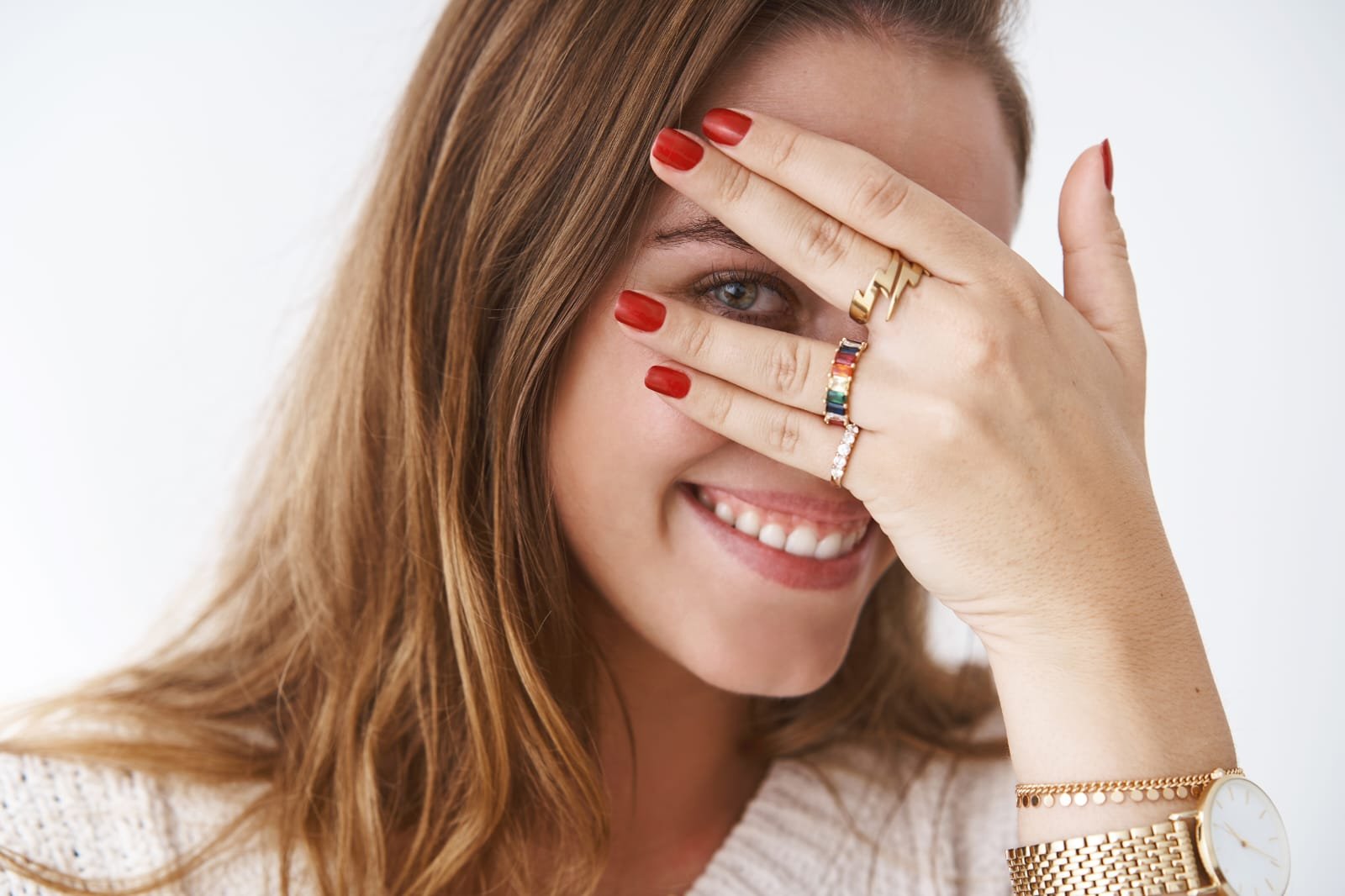
Finding the perfect ring is about more than choosing a design that catches your eye. The shape, width, size and style of a ring can all influence how it looks on your hand.
Some rings create a delicate, understated appearance, while others are designed to make a statement. Certain styles can visually elongate the fingers, while wider bands and bold designs can create a completely different effect.
Understanding how to choose the perfect ring for your hand can make it easier to find jewellery that complements your fingers, fits your personal style and works naturally with the rest of your jewellery collection.
Whether you love delicate gold bands, statement rings or layered ring stacks, this guide covers the key things to consider when choosing rings for women.
Consider Your Finger Length
Finger length is a useful starting point when deciding which ring styles you might want to try.
If you have shorter fingers and want to create the appearance of additional length, rings featuring vertical or elongated details can work particularly well.
Oval, pear-shaped and other elongated designs naturally draw the eye along the finger.
Slimmer bands can also create a more delicate appearance and leave more visible space around the ring.
For longer fingers, there is plenty of room to experiment with different proportions. Wider bands, statement rings and stacked designs can all work beautifully.
However, these aren’t strict rules. The most important factor is whether you enjoy how the ring looks on your hand.
Think About the Width of Your Fingers
The width of your fingers can also influence how different rings appear.
On narrower fingers, delicate bands and smaller designs can create an elegant, proportional look. Several thin rings can also be combined to create a stack without overwhelming the hand.
Wider fingers can carry larger designs particularly well. Wider bands, statement rings and rings featuring substantial decorative elements can create a balanced appearance.
If you want a ring to create the impression of a slimmer finger, experimenting with slightly elongated or asymmetrical designs may help draw the eye vertically.
Ultimately, proportion is something you can experiment with rather than a rule you need to follow.
Best Rings for Short Fingers
When choosing rings for short fingers, styles that visually emphasise length can be particularly flattering.
Slim bands are an easy place to start because they leave more of the finger visible.
Rings with oval, rectangular, pear-shaped or other vertically oriented details can also create the impression of additional length.
If you enjoy stacking rings, consider combining several delicate bands rather than using multiple very wide rings on the same finger.
Good options to try include:
- Thin gold bands
- Delicate rings
- Oval designs
- Pear-shaped designs
- Vertical statement details
- Minimalist rings
The goal isn’t necessarily to make your fingers appear longer. These are simply useful styles to experiment with if that’s the effect you want to achieve.
Best Rings for Long Fingers
Long fingers provide plenty of space for experimenting with different ring styles.
Bold designs can work particularly well because there is enough room for the ring to make an impact without visually dominating the hand.
Chunky rings, wide bands and statement designs are all worth trying.
You can also experiment with stackable rings. Combining several bands on one or multiple fingers can create a layered look while making use of the additional space.
Round and square details can provide interesting contrast against the natural length of the fingers.
Good options include:
- Wide gold bands
- Statement rings
- Chunky rings
- Stacked rings
- Geometric designs
- Multiple rings worn together
Of course, delicate rings can look equally elegant on longer fingers. Your personal style should ultimately determine what you wear.
Best Rings for Slender Fingers
If you have slender fingers, both delicate and statement rings can work well depending on the look you’re trying to create.
Thin gold bands naturally complement narrow fingers and can create a minimalist aesthetic.
If you want something more noticeable, a slightly wider band or statement ring can introduce contrast.
Ring stacking is another excellent option.
Try combining two or three thin bands, either on one finger or spread across your hand. This adds detail while keeping the overall look balanced.
You can also mix simple bands with more decorative designs to make your ring collection feel less uniform.
Best Rings for Wider Fingers
Wider fingers can work beautifully with medium and wider bands.
Larger ring designs often have enough presence to create balanced proportions, while elongated decorative elements can visually draw the eye along the finger.
Statement rings are particularly worth experimenting with.
Rather than assuming you need to choose small jewellery, try different sizes and see what feels most natural.
Good choices can include:
- Medium-width gold bands
- Wide rings
- Statement rings
- Elongated designs
- Open rings
- Layered ring combinations
Comfort is particularly important. A ring should sit securely without pinching or restricting movement.
Consider the Shape of Your Hands
Your overall hand proportions can also influence how rings look.
Smaller hands may suit delicate rings particularly well, but one carefully chosen statement ring can also create an attractive focal point.
Larger hands provide more room for bold jewellery, wider bands and multiple rings.
Instead of focusing exclusively on finger shape, look at the overall balance between the ring and your hand.
Sometimes a ring that appears large when viewed on its own can look perfectly proportional once worn.
This is one reason trying different styles is so useful.
How to Choose the Right Ring Size
Even the perfect ring design won’t feel right if the size is incorrect.
A properly fitting ring should slide over your knuckle with a little resistance and sit comfortably around the base of your finger.
It shouldn’t feel painfully tight, but it also shouldn’t be loose enough to slide off easily.
Remember that finger size can fluctuate slightly throughout the day due to factors such as temperature.
For a more representative measurement, consider measuring your finger when your hands are at a comfortable, normal temperature rather than immediately after being somewhere particularly hot or cold.
If you’re between sizes, check the sizing guidance provided by the retailer before deciding which option to choose.
How to Choose a Ring for Your Index Finger
The index finger is a great location for statement jewellery.
Because of its prominent position on the hand, a ring worn here naturally attracts attention.
Chunky gold rings, decorative designs and wider bands can all work particularly well.
If you prefer something more understated, a simple band can still create an elegant effect.
The index finger can also be incorporated into a larger ring stack by combining a statement design with smaller rings elsewhere on the hand.
How to Choose a Ring for Your Middle Finger
The middle finger’s central position makes it naturally suited to a wide range of ring designs.
A statement ring can become the focal point of your jewellery, while a simple gold band can create a more minimalist appearance.
Because the middle finger is usually one of the longest fingers, larger designs can often sit comfortably without appearing disproportionate.
If you’re creating a ring stack across your hand, the middle finger can provide a useful anchor for the overall arrangement.
How to Choose a Ring for Your Ring Finger
The ring finger is traditionally associated with engagement and wedding jewellery, but there is no reason it can’t also be used for fashion rings.
Simple gold bands can create an elegant everyday look, while more detailed rings can add personality.
If you’re already wearing engagement or wedding rings, you can coordinate other jewellery around them rather than trying to make every piece match exactly.
For example, simple gold rings on neighbouring fingers can complement an existing ring stack without competing with it.
How to Choose a Ring for Your Little Finger
Pinky rings have become a popular way to add a distinctive detail to a jewellery look.
Because the little finger is smaller, proportion is particularly important.
Small signet-style rings, delicate bands and compact statement designs can all work well.
A pinky ring can also provide visual balance when several rings are being worn across the opposite side of the hand.
It’s a relatively small detail that can make an entire ring combination feel more intentional.
How to Stack Gold Rings
Learning how to stack rings gives you even more ways to style your jewellery.
Start with two or three pieces rather than filling every finger immediately.
Try combining rings with different widths and textures. For example, you could pair a simple thin band with a more detailed ring and a slightly wider design.
You don’t need to stack every ring on the same finger either.
A balanced arrangement might include two rings on one finger, one statement ring on another and a smaller ring elsewhere.
Leaving some fingers bare creates visual space and prevents the jewellery from looking overcrowded.
Mix Different Ring Styles
One of the easiest ways to make a ring collection feel personal is to mix different styles.
You could combine minimalist bands with textured rings, geometric designs or statement pieces.
The rings don’t need to come from the same collection.
Using a consistent gold tone can help bring different designs together while still allowing every ring to have its own character.
This also makes your jewellery collection more versatile because individual pieces can be worn alone or combined in different ways.
How Many Rings Should a Woman Wear?
There is no correct number of rings to wear.
For a minimalist look, one or two carefully selected rings may be enough.
For a more expressive look, several rings can be distributed across both hands.
The key is balance.
If you’re wearing one particularly bold statement ring, you may want the surrounding rings to be simpler.
Alternatively, several delicate rings can be combined without any individual piece becoming dominant.
Experiment until the overall arrangement feels comfortable and suits your personal style.
Match Your Rings With Your Other Jewellery
Your rings don’t need to be considered separately from the rest of your jewellery.
Think about how they work with your bracelets, necklaces and earrings.
If you’re wearing several statement rings, you might choose a more delicate bracelet. If your rings are minimal, a bolder bracelet can become the focal point.
Keeping similar gold tones throughout your jewellery can create a cohesive appearance without requiring every piece to match.
You can also experiment with different textures to add visual interest.
Choosing Gold Rings for Everyday Wear
For everyday jewellery, versatility and comfort are especially important.
A ring you plan to wear regularly should work with different outfits and feel comfortable throughout the day.
Simple gold rings for women can be particularly versatile because they can transition easily between casual clothing, workwear and evening outfits.
Minimalist bands can be worn individually for a clean look or combined when you want something more noticeable.
Having several versatile designs allows you to change your ring combinations without needing an entirely different collection for every occasion.
Choosing 18K Gold-Plated Rings
18K gold-plated rings offer a way to enjoy the warm appearance of gold at a more accessible price point than comparable solid-gold jewellery.
They can be especially useful if you enjoy experimenting with different ring styles or building layered combinations.
Instead of investing heavily in every individual design, gold-plated rings can allow you to build a more varied collection.
However, gold plating requires appropriate care.
Rings naturally experience more contact and friction than many other types of jewellery, so it’s particularly important to remove gold-plated rings before activities that expose them unnecessarily to water, chemicals or abrasion.
Avoid contact with perfume, lotions and harsh cleaning products where possible, and store your rings carefully when you’re not wearing them.
Frequently Asked Questions About Choosing Rings
What type of ring makes fingers look longer?
Slim bands and rings with elongated or vertically oriented details can help create the visual impression of longer fingers. Oval and pear-shaped designs are popular options.
What rings look best on short fingers?
Delicate bands and vertically oriented designs can complement shorter fingers. However, the best choice ultimately depends on your personal style and what feels comfortable.
What rings suit long fingers?
Long fingers can suit many different styles, including wide bands, statement rings, geometric designs and stacked rings.
Do rings make your fingers look slimmer?
Certain ring shapes can influence visual proportions. Elongated designs and appropriately proportioned bands can draw the eye vertically, which may create a more streamlined appearance.
Can you wear multiple rings on one hand?
Absolutely. Multiple rings can be worn across one hand or stacked on individual fingers. Mixing different widths and textures can create a more interesting arrangement.
Should all your rings match?
No. Rings don’t have to match perfectly. Combining different designs while maintaining a common element, such as a gold tone, can create a cohesive but individual look.
Which finger is best for a statement ring?
The index and middle fingers are popular positions for statement rings because of their prominence, although a statement ring can be worn on whichever finger feels most comfortable.
Finding the Perfect Ring for Your Hand
Understanding how to choose the perfect ring for your hand can make it easier to discover styles that complement your fingers and fit naturally into your jewellery collection.
Consider your finger length and width, experiment with different band sizes, and don’t be afraid to try designs outside your usual style. Shorter fingers may suit delicate or elongated designs, while longer fingers provide plenty of space for wider bands, statement pieces and layered ring stacks.
Most importantly, these suggestions aren’t strict rules. The perfect ring is ultimately one that feels comfortable, complements your personal style and works naturally with the jewellery you already own.
Whether you prefer understated bands, statement designs or carefully layered stacks, experimenting with different combinations is one of the best ways to discover what suits you.
If you’re looking for a reputable UK jewellery brand offering contemporary designs, Pretiosa offers a collection of 18K gold-plated rings and women’s jewellery designed for both everyday styling and special occasions. From individual statement pieces to rings that can be mixed and stacked, the collection offers plenty of options for finding a style that works with your hand and personal aesthetic.
